Advertisement Close

Education

Students in California Might Face Criminal Investigation for Protesting Film on Israeli Army
Murtaza Hussain
The Intercept

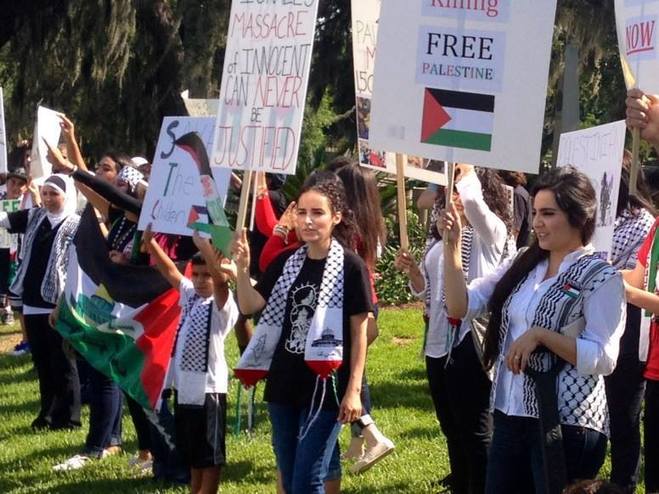
LAST MONTH, A GROUP OF STUDENTS at University of California at Irvine gathered to protest a screening of the film “Beneath the Helmet,” a documentary about the lives of recruits in the Israeli Defense Forces. Upset about the screening of a film they viewed as propaganda for a foreign military, the students were also protesting the presence of several IDF representatives who here holding a panel discussion at the screening.

That student protest has since become the subject of an intense controversy. The school’s chapter of Students for Justice in Palestine is now facing the possibility of being banned from the campus. In addition, a legal representative for some of the students involved in the protest, Tarek Shawky, told The Intercept that the students were informed by the university that their cases have been referred to the district attorney for criminal investigation.

The day after the event, the school’s chancellor released a statement accusing student protestors of “crossing the line of civility.” In his statement, posted on the school website, Chancellor Howard Gillman said that “while this university will protect freedom of speech, that right is not absolute,” adding that the school would examine possible legal and administrative charges against the protestors. News reports cited claims that attendees at the film had been intimidated and blocked from exiting the event.

The protestors at the event represented a wide range of student groups, including Students for Justice in Palestine, Jewish Voice for Peace, and the Black Student Union. Students who spoke with The Intercept denied that anyone had intimidated attendees at the event or blocked access. “We held our protest in a way that reflected university guidelines, we didn’t use amplified sound and we didn’t restrict anyone’s freedom of access to the event,” says Daniel Carnie, a member of Jewish Voice for Peace who took part in the protest.

Contacted for comment, a media relations representative at UC Irvine said that it was normal practice for cases like this to be referred to the District Attorney. “It is routine for UC Irvine Police Department, when called upon to investigate an incident on campus, to forward the investigation to the District Attorney’s office,” said Cathy Lawhon. “It’s then up to the DA’s office to determine if any charges are warranted.” Lawhon added that the school investigation into banning Students for Justice in Palestine was proceeding separately.

Reached for comment, the Orange County District Attorney stated that they have yet to receive a referral on the case from the school.

The incident is only the latest in which officials at UC Irvine and other major universities around the country have taken harsh measures against pro-Palestinian activists. “There is a really ugly history of targeting student groups advocating for Palestinian issues,” says Liz Jackson, a staff attorney with Palestine Legal, a group which provides legal advice and advocacy to individuals in the U.S. advocating for Palestinian rights. “It suppresses the really important debates about U.S. foreign policy that young people need to be having. Instead of being able to engage freely and voice opinions that challenge the status quo, one side of the debate is just being crushed.”

A REPORT ISSUED LAST YEAR by Palestine Legal and the Center for Constitutional Rights documented 152 incidents of free-speech suppression on U.S. campuses in 2014. These incidents have included acts of censorship, threats of legal action and even accusations of support for terrorism. Citing the threat posed to the First Amendment by such acts, the report added that they were “undermin[ing] the traditional role of universities in promoting the free expression of unpopular ideas and encouraging challenges to the orthodoxies prevalent in official political discourse.”

Threats, punishment and intimidation are all being routinely used to stifle dissenting viewpoints on Israel-Palestine, says Omar Shakir a fellow at the Center for Constitutional Rights and a co-author of the report. “University officials are erecting bureaucratic actions to make it harder to hold certain events, imposing administrative sanctions and even firing and denying tenure to professors for their views on Israel-Palestine, efforts that collectively represent a grave threat to the First Amendment.”

For instance, Native American Studies Professor Steven Salaita lost his tenured faculty position at the University of Illinois in 2014 after being accused of incivility in his online comments on Israel-Palestine. After a public legal battle, last year the school settled a lawsuit filed by Salaita for financial compensation.

In the case of UC Irvine, Shakir adds that the university’s charge of “incivility” on the part of protestors is a particularly egregious attempt to stifle protected speech. “Accusations of incivility have always been used by those in power to justify attempts to suppress changes to the status quo,” Shakir says. “The term itself, ‘civility’ represents coded language that in the past has been used to try and suppress groups deemed ‘uncivilized,’ like Native-Americans and African-Americans in the United States. It has no place being used as a basis to silence student activists today.”

Those views were partly echoed by Ari Cohn, a lawyer with the Foundation for Individual Rights in Education, a campus free-speech organization. “If allegations that protestors at UC Irvine disrupted the event are substantiated that would not be protected speech, as it would impinge on the speech of others attending the event.” Cohn added, however, that “civility in itself cannot be mandated by schools. Incivility plays a fundamental role in much of the social activism on campuses.”

THREATS TO SPEECH, have come not only from university administrations but from law enforcement as well. In 2010, Osama Shabaik was among a group of eleven students at UC Irvine who were arrested after protesting an appearance by then-Israeli ambassador Michael Oren at the school. Oren’s speaking event came roughly a year after Operation Cast Lead, a three-week Israeli military campaign against the Gaza Strip that killed hundreds of civilians. Intent on making a point about the inappropriate nature of Oren’s appearance following the attack, Shabaik and others organized a protest to disrupt the event.

In an incident that was captured on video, Shabaik and several other students repeatedly stood up in the crowd to interrupt Oren’s speech, chanting slogans against Israeli military abuses during Cast Lead. The students were detained and ejected from the event, something Shabaik says they had expected. But what came next was stunning. The school administration referred the students to the police, filing misdemeanor criminal charges against them for disrupting the event. The charges carried a maximum of one year in prison for each of those who protested.

The following year the case went to court, where Shabaik and nine other students were convicted and sentenced to three years probation.

“The administration was definitely sending a message and implicitly threatening our futures by having us charged as criminals for protesting,” reflects Shabaik today. “A lot of those who were charged were students planning to go on to medical school or law school, and they were worried that having a criminal record would prevent that from happening.”

Shabaik has since gone on to graduate from Harvard Law School, but is concerned about how his criminal record could affect his future employment prospects. Looking back at the incident, he believes it helped inaugurate a high-level campaign to silence dissent on Israel-Palestine in the United States, that has since extended to state legislatures.

Earlier this month, New York Governor Andrew Cuomo signed an executive order that would force public institutions in New York to divest funds from groups supporting the Boycott Divestment and Sanctions (BDS) movement. The executive order has been criticized as a form of political blacklisting. Shabaik believes Cuomo’s proposal echoes his own experience, where powerful institutions and public figures have sought to quash dissent on this issue.

“Its important to understand duality of responses when it comes to free speech. The whole essence of free speech is to challenge power and push back against government repression,” says Shabaik. “The move to stop debate on this issue is now leading to crackdowns at state-funded colleges and universities and even at the state legislature level. People are facing serious threats to their future for speaking out against the status quo.”

IN RECENT YEARS, a movement has built, mostly on the political right, which charges that free speech is being endangered on American college campuses. The most prominent voices on this issue have been conservative activists like Breitbart journalist Milo Yiannopoulos and Daily Wire’s Ben Shapiro. But liberal writers such as Jonathan Chait have also relentlessly fixated on the idea that “political correctness” is stifling free expression among a new generation of students.

Most of these protestations have focused on a specific type of speech: the right to “offend” by speaking against perceived left-wing orthodoxies on race, feminism and cultural issues. The charges of speech suppression in such cases have generally not been leveled at university administrators or law enforcement, but rather at students who view such speech as offensive. This differs markedly from the Israel-Palestine controversies, where state-funded bureaucracies and government officials have been involved with stifling speech on an issue directly related to American foreign policy.

“Its important to distinguish between the idea that certain views are not popular on campuses, something that may be worthy of discussion separately, and the phenomenon of public institutions and officials taking direct action to restrict speech about vital aspects of government policy,” says Shakir of the Center for Constitutional Rights. “The core of the First Amendment defends the right to free speech on campuses, and we should all be concerned when McCarthey-esque tactics are being used by those in positions of power to silence debate on issues of global importance.”

Source: theintercept.com
She Who Tells a Story: Women Photographers from Iran and the Arab World

She Who Tells a Story: Women Photographers from Iran and the Arab World BY: Clara Ana Ruplinger/Contributing Writer This summer, Washington’s National Museum of women in the arts is displaying She Who Tells a Story, or in Arabic, Rawiya (راوية), which brings together art from 12 women photographers from Iran and the Arab world. The series is as … Continued

Lebanese American University’s Unique Perch in New York

Benjamin Plackett

Al-Fanar Media


Many universities in the United States and Europe are falling over themselves to expand their presence in the Middle East. Whether that’s through fully-fledged campuses, strategic partnerships or alumni centers, they’ve never been keener to invest.

This internationalization has largely flowed in one direction, from West to East. But somewhat quietly, the Lebanese American University (LAU) has started bucking this trend with its academic center in New York.

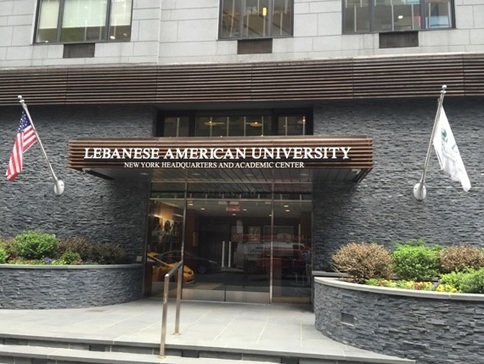
Nestled in the heart of Manhattan’s hectic Midtown, the academic center— with its uniformed doorman and manicured entrance—looks perfectly at home among the area’s many hotels and embassies.

The university, headquartered in Beirut, was first founded as a girls’ elementary school by a wealthy American missionary called Sarah Smith who had traveled from Connecticut to Lebanon in the 1830s. Through education, she sought to build bridges and traverse cultural differences. Eventually, through a series of evolutions and expansions, the small girls’ school grew to become a co-ed university.

“The president of LAU has said that we’ll give back to the United States what Sarah Smith gave to Lebanon,” says Lina Beydoun, the center’s Academic Executive Director. “That’s why this academic center was established, and we try to stay true to this mission of building bridges between East and West.”

The center has expanded from what was previously a fundraising and alumni office. It now offers credit-bearing courses for both American students from other universities and LAU students studying abroad. Subjects have included Arabic, marketing, management and finance. The tuition is $450 per credit and the number of credits per course varies but is usually around 3 or 4.

The facility stretches across three floors with a library, study areas, and a number of lecture rooms furnished with smart whiteboards. Eventually the library will house 5,000 books. The librarian comes from Beirut twice a year with suitcases full of books and resources to stock the shelves. “It’s still cheaper for her to do that,” explains Beydoun. “Many of the books are also donated in Lebanon.”

The university purchased the building for $10 million. “Considering it’s 30,000 square feet, it was a steal,” says Paige Kollock, the director of communications and media at the center. With its sought-after location, it’s not hard to believe Kollock. After the university bought the place, it cost an additional $7 million to renovate.

LAU sometimes shares the center with other Arab universities that still only have an alumni office in the city. For example, they have collaborated with the American University of Beirut (AUB) and the American University in Cairo (AUC) on lecture series and events.

“I have to admit AUC and AUB envy us here in this space,” brags Beydoun. “But at the same time there’s a collegial feeling. I myself am an AUB alum.”

AUB, for its part, isn’t yet eager to follow in Beydoun’s footsteps. For the time being they seem content to keep their presence in New York to a minimum. The university’s activities in the city are focused on alumni, although they do occasionally organize their own events for visiting academics.

“There are longer-range plans for some remote lectures from the campus to our offices here,” explains Eva Kilmas, the director of alumni relations for AUB in New York, “but those plans are still very much in formulation.”

The American University in Cairo’s New York office currently exists to help with fundraising, alumni relations and marketing for its publishing arm, AUC Press. But its director, Jennifer Bayne, says her office shares Lina’s vision for more cultural exchange in the direction of East to West.

“While the trend in higher education is expanding American universities in the Middle East,” she says, “bridge-building in the U.S. falls into the larger scope of the purpose of education by stimulating cross-cultural discussion, developing international partnerships, and of course building support and appreciation for the university’s work.”

Because of this, Bayne says her university is also expanding its reach in the Americas, though not with academic and classroom activities just yet. “We do plan to expand our presence in other ways,” she says.

AUC is setting up alumni chapters in other cities across the United States and Canada and increasing the number of events it holds in New York to engage alumni, donors and those interested in Egypt. AUC Press also just unveiled its first fiction venture in the U.S. market, which translates Middle Eastern fiction into English.

Beydoun suspects that the other Arab universities in town may be waiting to see if her academic center is judged to be a success before taking a similar plunge. “It is financially costly and risky to take such a step,” she says.

It hasn’t all been smooth sailing since the center was launched nearly 3 years ago. In fact, Beydoun says that it has recently become difficult for students back in Lebanon to get the visas they need to come to the United States and study at the center. Many who were due to arrive in New York this summer were refused a visa by the U.S. State Department.

“Prior to the visa complications, my hope was to bring Lebanese students and American students together for an exchange,” she says.

The more stringent immigration rules have forced her to put this on hold for the time being. “We’re not there yet but we still hope to be,” she explains.

The center is still growing into its space, and while Beydoun says the center will stop short of becoming a branch campus, but it’s yet to fully understand its own identity and purpose.

The center is essentially at an experimental stage, through which Beydoun is trying to find the sweet spot of how many courses the center should offer and in what subjects. She says they’re also thinking about offering continuing education for professionals.

The center is blessed with patience from the head office in Beirut to explore like this because the president understands the potential of such an asset, says Beydoun. “I don’t see us going anywhere because the space here in Manhattan represents a huge opportunity.”

Source: www.al-fanarmedia.org

We Can’t Turn Our Backs Again on Refugees

Imagine being a parent explaining to their children what the sounds of bombs are. “When the shelling became heavier, I would tell them it was fireworks, but I could not lie any longer,” one mother says in the video. The only voices we seem to hear in the U.S. are the ones that invoke fear … Continued

Teaching Coexistence in Israel

By Yardena Schwartz

US News and World Report

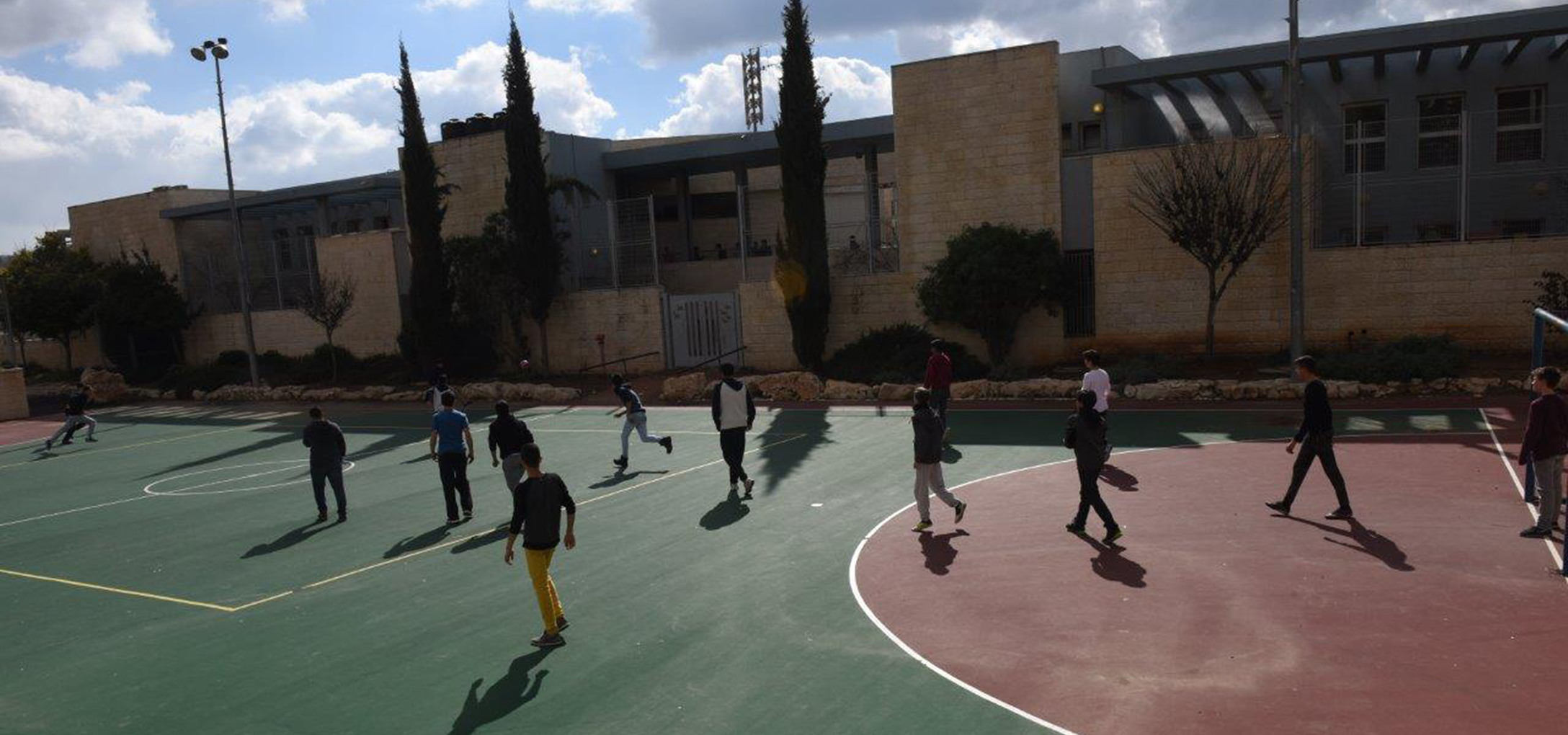
JERUSALEM — Roaming the halls of a certain school in this city, one could easily mistake Jerusalem as the capital of the elusive coexistence that many have sought and failed to create in this crossroad of religion and conflict.

An Arab teacher and a Jewish teacher ask their fourth-grade students to take out their homework. The class project is “Identity” and the assignment is to research the various historical names of their city. What would be an explosive topic among adults is merely a simple history lesson among these 10-year-olds.

An Arab boy stands in front of the class and begins. “Thousands of years ago, before Palestine or Israel, Jerusalem was Ir Yabus,” he says, referring to the City of the Jebusites, the ancient tribe conquered by King David in the First Testament. A Jewish student adds that the City of David is one of Jerusalem’s nicknames. An Arab girl then tells the class that the Romans renamed Jerusalem “Aelia” after conquering the city and destroying of the Second Jewish Temple in 70 A.D.

The very existence of this temple, and the mosque that sits atop its ruins today, are why the Temple Mount is one of the world’s most disputed pieces of real estate. As the girl sits down, there is not a hint of tension in the room. Just outside, a group of Jewish and Arab high schoolers walk down the hallway, giggling.

It’s a scene that would be nearly impossible to find anywhere else in Israel, where Jewish and Arab children almost never learn together, and rarely form friendships. Although Arabs represent 20 percent of Israel’s population, Jews and Arabs grow up living separate lives – beginning with a divided education.

The school is run by Hand in Hand, a nonprofit organization that has established bilingual schools across the country. With more than 1,300 children at six schools throughout Israel, Hand in Hand is the country’s largest network of integrated education. Its classrooms serve an equal mix of Jewish and Arab students, with lessons taught simultaneously in Hebrew and Arabic by two Arab and Jewish teachers. The school’s curriculum is a mixture of government-directed core topics, such as math and science, and material that Hand in Hand develops.

Perhaps Hand in Hand’s crucial difference from Israel’s official curriculum is the two narratives it teaches. The Jewish narrative tells of 2,000 years in exile from the ancient land of Israel, the 1947 U.N. partition plan that divided British Mandate Palestine into a Jewish state and an Arab state, the declaration of Israeli independence in 1948, the immediate attacks on the new Jewish state from five surrounding Arab countries, and Israel’s surprise victory. Under the Arab narrative, this same event is the Nakba, the catastrophe, which led to hundreds of thousands of Palestinians losing their homes amid the fighting.

The belief is that knowing the two narratives will help young Jews and Arabs understand the other’s world view.

“It’s an opportunity to truly see the other side, not from afar, not from the news, and not from the rumors,'” says Lilach Rosenfeld, who graduated from Hand in Hand’s Galilee school in 2008 and remains friends with some of her Arab classmates. “You discover the culture, the religion, the traditions, the thoughts, and the world of the other side from up close.”

While there is no legally instituted segregation in the education system – Arabs can attend Jewish schools and vice versa — the vast majority of Arabs attend Arabic schools, as Jews attend Jewish schools. This dual system is not forced upon anyone, but rather reflects the divergent needs and characteristics of two segments of the Israeli population who have little in common beyond the country they live in.

Israel’s Jewish and Arab citizens speak different languages, celebrate different holidays, observe different cultural norms, tell two distinct historical narratives, and typically live in different communities.

This system has been in place since the British Mandate for Palestine, before the U.N. Partition Plan led to the establishment of the State of Israel in 1948. Until recently, this division was barely questioned. Most parents, including Arabs, support it, according to Yousef Jabareen, an Arab member of the Israeli parliament and director of The Arab Center for Law and Policy.

But in recent years, as hope in peace negotiations has faded, demand has grown from parents who want their children to learn with and about what many here refer to as “the other side.”

Nadia Kinani is one of those parents. As an Arab mother of three, she helped to establish the Jerusalem Hand in Hand school with Arab and Jewish friends who envisioned a shared future for their children.

What began as a classroom of 20 students is now the only school in Israel where Arabs and Jews learn together from kindergarten through 12th grade. This year it had 650 students, with 150 on the waiting list.

“The more difficult and hopeless the situation is, the more people look for something that will give them hope,” says Kinani, who is now the school’s principal. Two of her daughters have graduated, the third is in 10th grade, and Kinani says they are all more open and tolerant than their peers who attended mainstream schools.

“Usually when something bad happens between Jews and Arabs, the city’s people divide along lines. Here, we come in and talk about it together,” Kinani says, adding that her daughters have close Jewish friends.

In a nation of 8 million people, some say there aren’t enough of these schools to go around. After all, aside from Jerusalem, no other Hand in Hand school runs through 12th grade. Rosenfeld’s school ends after the sixth grade.

Although Hand in Hand schools are public and receive government funding, that support is just enough to finance half of their operations, which require double the number of teachers compared to non-bilingual schools. With waiting lists at every school and dozens of parents requesting that Hand in Hand open schools in their communities, the organization hopes the Israeli government will eventually boost funding. Until then, half of their financing comes from donations, available through their website, and fees from parents.

That Hand in Hand thrives in a city like Jerusalem is proof that it can thrive anywhere, Kinani argues.

Still, the idea of co-educating Arabs and Jews is such a threat to some Israelis that last school year, two first-grade classrooms in Hand in Hand’s Jerusalem school were set on fire by Jewish extremists who painted the walls with this message: “There’s no coexisting with cancer.”

That didn’t stop Hand in Hand. In Kinani’s words, “It strengthened us.”

Ninety-eight percent of children came to school the next day, and their burned classrooms were rebuilt within weeks. Thousands marched through Jerusalem in solidarity. A month later, U.S. President Barack Obama invited students from the school to the White House to light Chanukah candles.

What the extremists failed to anticipate was that the media attention they sparked led thousands of Israelis to hear about an alternative school system they never knew existed. Calls from new parents skyrocketed, and Hand in Hand has more children on its waiting list than ever before.

Kinani and other parents hope that one day, with enough schools, they won’t need any more waiting lists.

Source: www.usnews.com

World Refugee Month – Concern for Crisis Sparks New Research

BY: Kristina Perry/Contributing Writer WASHINGTON, DC: Every year, the world observes June as World Refugee Month, with June 20th marking international events raising awareness for refugees hosted by the United Nations Refugee Agency. This year, World Refugee Month coincides with Ramadan, and the presumptive end of the presidential primaries. As the nation witnesses its closest … Continued

New Poll Shows Split Attitudes Towards Arab Refugees

BY: ANDREW HANSEN/ Contributing Writer On Monday, the Brookings Institute hosted a panel discussion regarding the most recent polling of American attitudes toward refugees coming from the Arab world. The speakers of the event were esteemed experts on research pertaining to public attitudes on the greater Middle East area, including: William McCants, Director of Middle … Continued

#RumiWasntWhite – Hollywood Continues to Whitewash Films

BY: Clara Ana Ruplinger/Contributing Writer Recent news sources say that the writer of the box office hit film, The Gladiator, David Franzoni, wants to cast Leonardo DiCaprio as poet Jalaluddin al-Rumi, and Robert Downey Jr. as Shams of Tabriz, Rumi’s mentor. This line up of actors were selected for an upcoming film about the Iranian … Continued

ACC to Host 14th Annual Golf Outing And Scholarship Awards Dinner, June 7

The Arab American and Chaldean Council (ACC), a premier nonprofit human service organization serving Southeast Michigan, will host its 14th Annual Golf Outing and Scholarship Awards Dinner, Tuesday, June 7 at Shenandoah Country Club in West Bloomfield (5600 Walnut Lake Road).

Registration and continental breakfast will begin at 10 a.m., when the driving range opens, followed by an 11:15 a.m. shotgun start for an 18-hole game of golf. The dinner program, which includes the scholarship ceremony, tournament award distribution and raffle, will commence at 5 p.m. Scholarships, whose funds are generated from the event, will be awarded to local high school seniors of Arab American and Chaldean descent.

This year, the ACC is welcoming three honorary co-chairs to the event: Bridget Hurd, Senior Director, Diversity and Inclusion, Blue Cross Blue Shield of Michigan (BCBSM); Monty Fakhouri, Corporate Business Manager, Beaumont Hospital; and Brian Santee, Senior Sales Director , Frito-Lay North America.

In her role at BCBSM, Hurd is responsible for leading and executing the organization’s diversity and inclusion strategy. With 24 years of progressive experience in communications, community relations, corporate giving and diversity and inclusion, she has worked tirelessly to help facilitate stronger linkages among the community and health care institutions. Prior to joining BCBSM, Hurd spent eight years at the Greater Detroit Area Health Council.

The Southfield, Mich. resident received a bachelor’s degree in communications from the University of Michigan and an MBA from Wayne State University.

Santee, of Bloomfield Hills, Mich., has worked with PepsiCo for more than a decade, serving the metropolitan Detroit and Cleveland regions. Last year, he chaired the company’s Feeding Detroit volunteer event where they partnered with Feed the Children to distribute non-perishable food and daily essentials to 1,600 Detroit families for the sixth year in a row. Santee holds a bachelor’s degree from the University of Minnesota, where he played on the varsity golf team, and an MBA from New York University.

Part of the Beaumont Health System for 10 years, Fakhouri has served in his current role since October 2015, having previously worked as the organization’s Business Manager and as an adjunct professor with Oakland University’s William Beaumont School of Medicine. In 1999, he began a decade-long career as the ACC’s Director of Public Health and Youth Development. Fakhouri graduated from Wayne State University’s medical school with a specialization in community medicine.

“I am looking forward to making our 14th annual golf outing our most successful yet. It is always such a pleasure to spend the day with ACC’s friends and supporters having fun on the course while also helping students reach higher education opportunities,” said Dr. Haifa Fakhouri, President, ACC. “With Bridget, Monty and Bryan joining us this year, I know we will make 2016 one for the record books.”

Tickets range from $100 per person for dinner to $200 per person and $750 for a foursome for the golf and dinner package. Information on sponsorship and participation opportunities can be found on at www.myacc.org.

About the Arab American and Chaldean Council (ACC) The Arab American and Chaldean Council (ACC) is the premier nonprofit human service organization providing services to the Middle Eastern and mainstream communities in Southeast Michigan. Founded in 1979, the ACC provides counseling, health care, social services, employment training, job placement, translation, interpretation and youth services to more than 70,000 clients in metro Detroit. The ACC operates 40 outreach offices in the tri-county area, staffed with bilingual and trilingual professionals to serve the Arab American and Chaldean American populations and offer assistance to the Middle East refugee population. For more information, visit www.myacc.org or call (248) 559-1990.

Arab American and Chaldean Council (ACC)
ACC is the premier non-profit human service organization providing services to the Middle Eastern and mainstream communities in Southeast Michigan. Furthermore, ACC provides better opportunities to enable newcomers to adjust to their new environment. As a bridge of understanding, ACC maximizes the skills, resources and expertise of the community to:
Build cooperation and understanding
Raise the level of individuals’ well-being
Increase cross-cultural understanding through education
Deliver human services, counseling and opportunities
Gear community members towards achievement
Empower through employment training and placement

Source: campaign.r20.constantcontact.com

20 Arabic Proverbs We Love

By: Yusra Al Shawwa/Contributing Writer Proverbs have played a meaningful role in Arabic literature, poetry, and everyday conversation. Here are some of the most timeless proverbs translated from Arabic to English.          

Politics & Prejudices: Trump Traumatizing children

By Jack Lessenberry
Metro Times

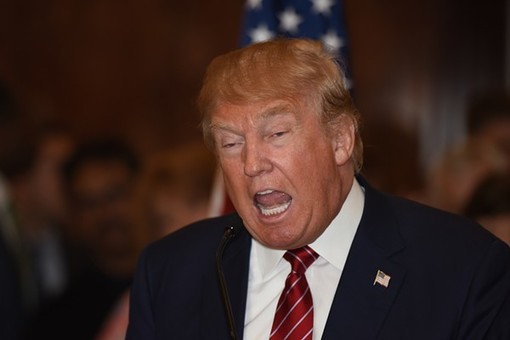
For nearly a year now, the media has been fascinated by Donald Trump’s every utterance, the more sexual and outrageous the better. Did he really talk about his schlong?

Did he really say “blood coming out of her whatever?” Did he really say John McCain wasn’t much of a war hero because he was captured? Well, yes, yes, and yes.

Will he really be the GOP nominee for president? Absolutely, comrades. When it comes to a Trump presidency, there is a hell of a lot to be concerned about.

But one of the biggest and so far too-overlooked ones is what the Trump campaign is doing to our nation’s children. Richard Cole is one of the grand wise men of this state: a fixer who was Gov. Jim Blanchard’s chief of staff, worked with Mike Duggan at the Detroit Medical Center, and was a senior executive at Blue Cross Blue Shield.

Not to speak of a host of other jobs, including stints as a professor at Michigan State and Ferris. Cole directed me last week toward a stunning new study by Morris Dees’ Southern Poverty Law Center, which has been crusading against hate and racism for many years. They surveyed schoolchildren — and found those from immigrant or minority backgrounds are terrified about what President Trump might do to them.

That’s not surprising, given that attacks on immigrants and promises to deport at least 11 million undocumented residents have been a hallmark of Trump’s campaign. The SPLC study looked hard at this.

The results were shocking: More than two-thirds of educators reported that young people in their schools — most often immigrants, children of immigrants, Muslims, African-Americans, and other students of color — had expressed concern about what might happen to their families after the election.

The study found that these kids, not surprisingly, are scared, stressed, and in need of reassurance and support from teachers. Muslim children are harassed and worried.

Even African-American children, whose families arrived here (as slaves) in some cases before the American Revolution, ask about being sent back to Africa.

Cole, who as a professor has written widely about the problems of child abuse, told me that “Childhood trauma comes in many forms, and the Southern Poverty Law Center national survey of teachers has documented a new form of child abuse in the form of political hate speech.

“Children across America, particularly minority children, are being traumatized by the mean-spirited political rhetoric Donald Trump has used to gin up his angry base.”

Worse, teachers often feel powerless to help, he told me, since many of them “seem fearful that their attempts to buffer the impact of this rhetoric on the children in their care will be seen as the kind of overt political statements that could jeopardize their careers.”

I rushed off to read the study, and found he was exactly right. This may be a real threat in Michigan especially, where we have higher-than-average populations of Muslim and African-American children.

Last week, I talked to my colleague Alicia Nails, an attorney and a journalist who runs our highly successful Journalism Institute for Media Diversity at Wayne State.

JIM, as we call it, has had the goal for more than 30 years of making America’s newsrooms look more like America. While some of our students are white young people with an interest in diversity, most are black, Muslim, Hispanic, or high-achieving members of other minority groups.

Nails told me her students are more cynical than scared, at this point, though they do talk about moving to Canada if Trump were to win. But it’s a different story for younger kids.

She went last month to talk at a career day at Clippert Academy Middle School in Southwest Detroit.

“The students in the six rooms I visited were 95 percent Latino — some not yet speaking English — with a few black, white, Arab, and Asian students among them,” she told me.

“The Latino students in one class absolutely brought up the issue. Trump IS on their minds as a crazy wild man with crazy wild ideas about excluding some Americans.”

How could they not have him on their minds?

The Southern Poverty Law Center found that this was definitely getting in the way of kids learning. A Tennessee kindergarten teacher said she has a student who constantly asks if the wall has been built yet. “Imagine the fear in my students’ eyes when they look to me for the truth,” she said.

They found Muslim kids who fear they would have microchips implanted under their skin, and bullies who taunted classmates of color that they would soon be deported.

Worse, some teachers have decided to avoid talking about the election entirely, either out of distaste, uncertainly about what to say, or fear for their own jobs.

Others vow to do the right thing, vowing, as one Indiana high school teacher did, “to take a stand even if it costs me my position.” Cole, who has four daughters of his own, hopes “American teachers don’t allow fear of retaliation to (have them avoid) the important role they can play in comforting our African-American, Latino, and Muslim kids who are feeling the toxic stress caused by the hate speech dominating so much of the nasty reality show playing out on the campaign stage.”

Studies have shown the effects of trauma like that can last a lifetime. Comparisons of any politician to Hitler ought to be avoided if at all possible.

Trump is certainly not a Nazi (he actually is rather more the swaggering Benito Mussolini) and is not anti-Semitic. But I can’t help wondering if he has left America’s minorities feeling a little like Jewish kids in Germany felt in 1932.

Hillary and Bernie wars

With the Republican smashmouth nominating campaign over, the ravenous cable news vultures have fastened on the remaining contest between Hillary Clinton and Bernie Sanders.

They want a headline every minute — and have been seeking to inflate the Bernie-Hillary battle into a war of toxic nastiness that is destined to rip the Democrats apart.

Don’t bet on it. If you are too young to remember, there was much snippiness and nastiness between Hillary and Barack Obama at this point eight years ago, when it was becoming increasingly clear that he had the nomination won, despite her string of primary wins late in the contest. Many of her supporters vowed never to support him, no matter what.

In the end, they virtually all did. And that was when the alternative was John McCain, not a swaggering slob who seemed sneeringly proud he knew little about government.

Hard Choices, Clinton’s 2014 memoir of her years as Obama’s secretary of state, begins with her historic meeting with Obama when it was clear he’d won the nomination. Issues and bitterness there were — but according to Clinton, both agreed not to blame the other for the excesses of their followers.

That will happen again. This time, assuming Bernie doesn’t pull off a miracle, Hillary Clinton will be the nominee.

She should be; she will end up with more votes. Does anyone really believe that anyone sane who supports Bernie Sanders could switch to the vulgar xenophobe discussed above?

Nor should any of them think staying home, or wasting a vote on a third-party candidate is a morally legitimate choice.

Trump has to be stopped.

And nobody should be allowed to forget it.

Source: www.metrotimes.com

Nadine Naber: Anti-Imperialism and Black-Palestinian Solidarity

New York, August 20, 2014. Photo credit: AP. By Nadine Naber Kzoo.edu Dr. Nadine Naber explores Black-Palestinian solidarity in this excerpt from her forthcoming article in the Critical Ethnic Studies Association journal, Volume 3, Issue 2. In the summer 2014, as activists in Ferguson, Missouri, faced the military-grade weapons of four city and state police … Continued

387 Results (Page 23 of 33)