20 Arabic Proverbs We Love
By: Yusra Al Shawwa/Contributing Writer Proverbs have played a meaningful role in Arabic literature, poetry, and everyday conversation. Here are some of the most timeless proverbs translated from Arabic to English.


Subscribe
to receive news by email
Poll
Will the Trump Administration Shift U.S. Policy in Favor of Palestine?
 Loading ...
Copyright © 2025 Arab America
Go topBy: Yusra Al Shawwa/Contributing Writer Proverbs have played a meaningful role in Arabic literature, poetry, and everyday conversation. Here are some of the most timeless proverbs translated from Arabic to English.
By KEITH COUSINS
CDPRESS.COM
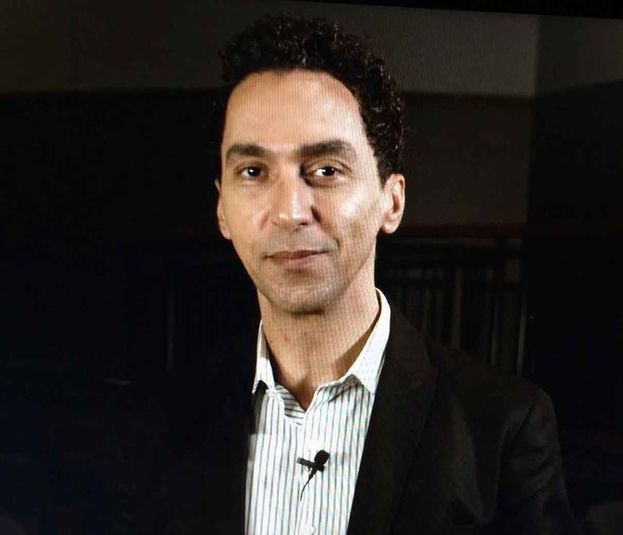
One of Michael Paul’s fondest memories of the beginning of his American journey took place after he drove his Jeep through a car wash in Post Falls.
When the wash was complete Paul, a native of Iraq, got out to dry the Jeep off and inadvertently locked his keys, wallet and phone inside. Unsure of what to do, Paul told The Press that he walked into a nearby laundromat, where the employee suggested he use their phone to call 911.
An officer Paul described as an amazing guy with a big smile arrived shortly after and quickly assisted him with getting into his car. The small act of kindness, Paul said, changed his life.
“Where I come from, the cop is against me because we do not have freedom,” he said. “The concept of a cop helping me open my car was something so different.”
Paul, who worked with the Navy as a cultural adviser and interpreter during Operation Iraqi Freedom, said there are countless examples of people in North Idaho helping him bridge the gap between the culture of his homeland and his new home in America. Now, he wants to return the favor.
On June 16, Paul will lead the first of a three-week seminar entitled “Language and Culture Series: Arabic” at The Salvation Army Ray and Joan Kroc Center, located at 1765 W. Golf Course Road, in Coeur d’Alene. The seminar, which lasts two hours each Thursday and begins at 6 p.m., will focus on the language, culture, art, music, and architecture of the Middle East.
“We’ll end it with a session on food and the nutrition we put on our tables,” Paul said. “I will make a demonstration for them, I cook very well.”
Paul said he recognizes that he is a minority in North Idaho, and quickly realized there is a natural cultural barrier. The idea for the seminar, which he plans to eventually bring to other parts of the country, is to share the beauty of his culture with the community he has grown to love, he added.
“The majority of people in our community doesn’t realize how much we have in common,” Paul said. “I love the Northwest because there is a lot of similar things here. For example, people here are very generous of their time and effort — they want to invite you to their house and share their food with you.”
The beauty Paul hopes to share, he added, is lost when individuals adopt a “They vs. I” attitude about others. Paul said he believes no human being wants to offend another person, but sometimes perception and the outside world paint others in a way that separates.
“There is bias everywhere in the world. But, I’ve always believed that explanation and understanding can fix any problem,” Paul said. “I want to be a bridge that connects the two and fills those gaps.”
For more information, or to register for the seminar, contact the Kroc Center at (208) 667-1865.
Source: cdapress.com
BY HANNAN ADELY
NORTH JERSEY.COM
Prominent Arab-American activists will speak at the Palestinian American Community Center in Clifton Thursday evening to stump for Sen. Bernie Sanders.
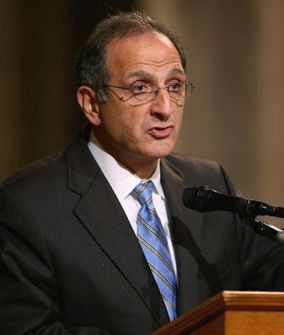
Jim Zogby, founder and president of the Arab American Institute, and Linda Sarsour, executive director of the Arab American Association of New York, will talk about “why Bernie is the best candidate for Arab Americans.” Palestinian-American comedian and writer Amer Zahr also will speak.
The event is sponsored by Sanders’ campaign for the New Jersey primary and by Muslim Americans for Bernie Sanders.
In his bid for the Democratic nomination, Sanders has courted Muslim Americans, who come from diverse ethnic backgrounds, and Arab Americans, the majority of whom are Christian. Although their overall numbers aren’t large in the U.S. – Muslims make up about 1 percent of the population, and many live in electoral swing states like Florida, Ohio and Michigan.
Political pundits say that a strong Arab American vote for Sanders helped him pull off a surprise victory in Michigan’s Democratic primary. According to news reports, Arabs voted for Sanders by a 2-to-1 margin. The Sanders campaign is hoping to tap into that kind of support in New Jersey in the primary on Tuesday.
Zogby, a member of the Democratic National Committee, has fought for Arab American political empowerment, for Palestinian rights, and for other causes important to the Arab community for three decades.
Last week, Sanders appointed Zogby to the 15-member committee that will write the Democratic Party platform.
Sarsour,, of Brooklyn, has been a vocal of police surveillance of Muslim communities and discrimination. She and Zahr have been active in Sanders campaign events across the U.S.
The event takes place at 7 p.m. at the Palestinian American Community Center, 388 Lakeview Ave., Clifton. It is open to the public, but RSVPs are encouraged.
Source: www.northjersey.com
Press Release from WhoIsHussain? In honor of the holy month of Ramadan, international organization, Who Is Hussain?, plans a hot meal lunch for the homeless at Cass community services on Saturday, June 11, at 12pm at 11850 Woodrow Wilson, Detroit, Michigan. Ramadan marks days of fasting from sunrise to sunset. The month is celebrated by Muslims giving to the needy … Continued
With all the anti-Arab bashing we see in the news every week, Arab America is determined to expose those who discriminate against our community. We will recognize those who vilify the positive influence and contributions Arabs have made to the fabric of American society. And we will use hummus as our weapon. By naming those … Continued
By Dustin Luca The Salem News The Friendly Mini Mart on Lafayette Street has a sign alongside its front door, saying, “We appreciate your business.” But a much darker message was scrawled across the convenience store’s front windows Friday morning. The words “Arab I.E.D. Sleeper Cell” were spray-painted across one window, and “I.E.D. Arab” across the … Continued
By Samuel Freedman New York Times ROSS, N.D. — Richard Omar drove his pickup truck through the cemetery gate and pulled to a stop in sight of the scattered headstones. As he walked toward a low granite monument, his running shoes crunched the dry prairie grass and he tilted forward into an unrelenting west wind. … Continued
With all the anti-Arab bashing we see in the news every week, Arab America is determined to expose those who discriminate against our community. We will recognize those who vilify the positive influence and contributions Arabs have made to the fabric of American society. And we will use hummus as our weapon. By naming those … Continued
Three Egyptian immigrants who saw a demand for Halal food in New York City started the Halal Guys street food carts serving up hot halal meats, pita brea, and sauces. They went from having one cart, to 355 throughout the country, and even one in the Philippines. From their franchise, they began a scholarship fund … Continued
by Vrushali Mahajan
NewsGram
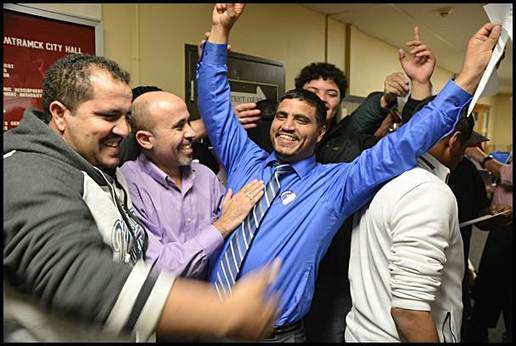
Despite all the hoopla over tolerance versus intolerance, USA continues to be the land of freedom of speech, justice and multiculturalism. Hamtramck- a town in Detroit area elected its first Muslim-majority city council. A town that was predominantly Polish Catholic in 1970s is today a Muslim -majority place.
That was in the first week of November of 2015. We profile one of the new councilman, Saad Almasmari.
Winning the majority of votes in Hamtramck City Council, Saad Almasmari described his excitement and experience about the race to it. “I am a social guy, I like helping my community, my city” says Almasmari.
Among three American-Muslim candidates on the ballot, Yemen born Saad Almasmari was one of them. All three received the most votes in a town that has the largest percentages of foreign born citizens in Michigan. “This is the city that has distinguished itself among others that the majority of the people on the city council are Muslims” Osama Siblani, publisher of Arab American News. But this news made a bigger remark due to its timing. “While presidential candidates are trying to prevent Muslims from coming to this county, they are becoming majority in one of the cities. I think this is the news” he adds.
Hamtramck was unhappy to know Mr. Donald Trump’s statement to ban Muslims from coming to America. “We have about 27% of Yemenis in Hamtramck, 22% Bengalis and about 11% Brazilians who are all Muslims” says Almasmari. From a Polish Catholic auto workers’ settlement, to Muslim American shop owners and businesses Hamtramck has been a case study for changing demographics by recent immigration. “Yes, it has all been quite surprising, all these national and international attention” Karen Majewski, Mayor- Hamtramck.
But this attention couldn’t last longer. When Almasmari attended his first general city council meeting in January, only two media organizations were present to record the moment. “In the council, I am an American before I am a Muslim. One of the newspapers asked me if I was able to meet Mr Trump, would you? I said yes I have no issues in meeting him. And then three days later, I received an email from their campaign asking if I can meet him for like 15-20 mins.”
If he ever meets Mr. Trump, he wouldn’t talk about his faith, but helping Hamtramck which is in financial trouble and has highest poverty rates in the state of Michigan clears Saad Almasmari.
Source: www.newsgram.com
The Lebanese box office sensation What About Tomorrow – consisting of old 8mm footage of performances of legendary singer/writer Ziad Rahbani’s play of the same name ̶ will make its U.S. premiere during the Arab American National Museum’s 2016 Arab Film Festival, part of the Cinetopia International Film Festival June 3-12, 2016, at venues throughout southeast Michigan. Leyla Bouzid’s … Continued
The New York Times
Good morning on this drizzly Tuesday.
You’ve probably heard of Little Italy. But Little Syria?
Travel back in time, New York.
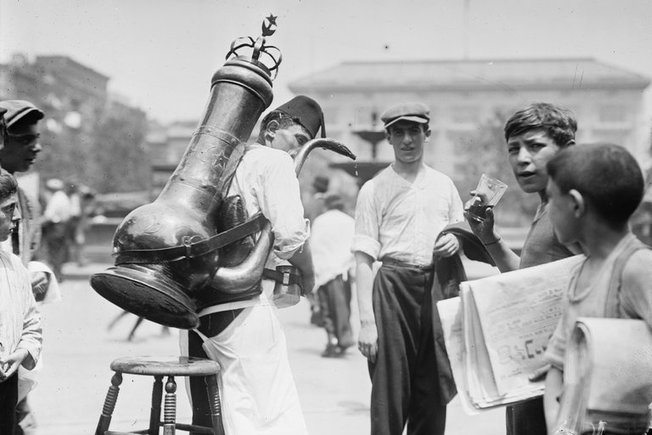
From the 1890s to the 1920s, Washington Street from Rector Street to Battery Place was the heart of New York’s Arab world, filled with thousands of immigrants from Greater Syria — roughly present-day Syria, Lebanon, Jordan, Israel and the Palestinian territories.
Many left their homelands because of troubles like starvation, lawlessness and religious intolerance.
Others came for economic opportunity, said Matthew Jaber Stiffler of the Arab American National Museum, in Dearborn, Mich.
Many of those involved in Greater Syria’s silk industry, for example, took their talents to New York, where they became renowned for making kimonos and women’s undergarments, Mr. Stiffler told us.
The streets of Little Syria were also vibrant with smoking parlors, cafes whipping up Turkish coffee and shops brimming with everything from rugs and brass lanterns to pistachios imported from the Middle East.
But the bustling neighborhood began to dwindle after the Immigration Act of 1924, Mr. Stiffler said.
And the Little Syria that remained was demolished when construction for the Brooklyn-Battery Tunnel began in the 1940s.
You won’t catch a whiff of the hookah and spices there anymore, but look closely at Washington Street today, and you can still see traces of the quarter’s Downtown Community House and St. George Chapel.
You can learn more about Little Syria and its legacy at an exhibit by the Arab American National Museum that opens tomorrow evening at the Department of Records and Information Services on Chambers Street.
Source: www.nytimes.com
855 Results (Page 51 of 72)